


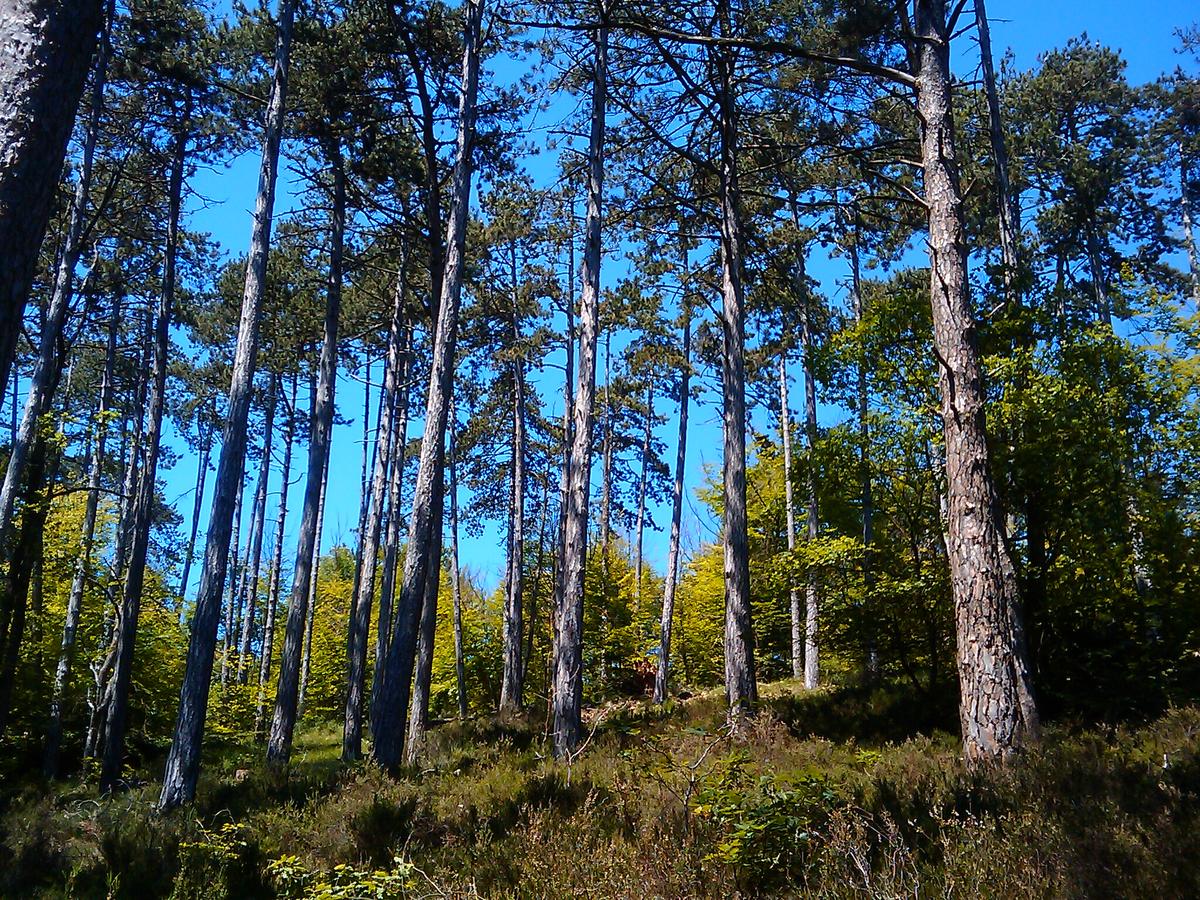
Credits: Photo AI, image generated with AI assistance — CC BY 4.0 — free to use with backlink to Photo AI.
A volunteer firefighter from Fontainebleau, born in 2007, admitted to setting fire to twigs. He said he used a lighter and gasoline on Monday, July 13, in Arbonne-la-Forêt. Suspended by the Seine-et-Marne fire and rescue service (SDIS), he remains at the center of the investigation. The inquiry still has to determine which fire this act is tied to. The fires scorched nearly 2,000 hectares.
An Act Admitted, Responsibility Still To Be Established
The most firmly established fact concerns a fire start in Arbonne-la-Forêt, southwest of Fontainebleau. The young volunteer admitted to igniting twigs using a lighter and gasoline. Fontainebleau prosecutor Diane Ngomsik said so Tuesday. Taken into custody Monday, he had no known criminal record. His custody had been extended at the time of the prosecution’s latest detailed update.
This admission alone does not make him responsible for the entire Fontainebleau fire. Nor is it enough to hold him accountable for the roughly 2,000 hectares burned. The prosecution reported several fire starts, occurring on different dates and in different areas. No technical link has been made public between the act admitted in Arbonne-la-Forêt, a specific fire origin, and the areas ultimately affected.
This distinction is key to answering the question of who set the Fontainebleau forest on fire. A person can admit to one act without their responsibility for the spread of a blaze having been proven. Investigators must locate the point of origin and analyze the traces left on site. They must then reconstruct the fire’s path before establishing causation.
A Multi-Branch Timeline
The main blaze started Sunday, July 12, near the A6 highway. It burned about 1,500 to 1,600 hectares. Two people were taken into custody Tuesday in that part of the case. The prosecutor raised the possibility of an accidental start linked to work near the highway. She said checks were underway, without confirming that lead. The investigation is still examining both accidental and deliberate causes.
Another fire broke out Monday afternoon near Fontainebleau, in the Faisanderie and Grand Parquet area. It burned about 450 hectares. A man, also born in 2007, admitted to throwing away a cigarette and accidentally starting a fire. Prosecutors said no link had been established between that man and the volunteer firefighter suspected in the Arbonne-la-Forêt fire.
Two other custody holds were lifted Tuesday afternoon, for lack of sufficient evidence at this stage. Four people were still being held across the various strands of the case. On Wednesday, a separate proceeding was added: a 46-year-old man was arrested in a parking lot closed to the public near the forest. Crumpled papers and a lighter were reportedly found in his vehicle, according to a police source cited in an AFP dispatch. He is suspected of attempted destruction by fire, with no publicly established link to the earlier fires.
The investigation has been assigned to the Paris research unit. Crime-scene technicians and fire-cause specialists are assisting. Some findings were delayed because the burned areas were inaccessible. Once the sectors were secured, experts could look for residues and compare possible points of origin. They are also checking whether one fire merged with another.
Fires Contained, But Not Yet Extinguished
The two major fires were declared contained on Tuesday, July 14, in the late afternoon. This means the flames are no longer spreading beyond the perimeter secured by responders. It does not mean all burning has stopped. On Wednesday, the Seine-et-Marne prefecture published a situation update on the fires. It warned that full extinguishment could still take several days, or even several weeks.
Emergency crews remained heavily deployed in both areas. The latest official count listed 504 firefighters in Noisy-sur-École and 165 around the Faisanderie. Three Canadairs, one Dash aircraft, and two water-dropping helicopters supplemented the operation. Moderate flare-ups were still observed at Grand Parquet on Wednesday morning.
The area’s peat-rich soil makes operations difficult. Heat can remain trapped in the ground, stumps, or fallen branches, then reappear as flames away from the original front. Firefighters are therefore flooding the smoldering zones. The evacuated residents of Vaudoué were able to start returning home. The A6 was to reopen gradually and under restrictions.
The SDIS Suspends The Volunteer And Responds Cautiously
After the custody announcement, the Seine-et-Marne fire and rescue service (SDIS) suspended the volunteer firefighter. The agency expressed its “deepest shock,” while conditioning its judgment on the courts definitively confirming the facts. It spoke of a possible “betrayal” of the public and of rescue values if the facts were proven.
Paul-Édouard Laurain, spokesperson for SDIS 77, described the mood within the ranks. He told AFP he felt “a sense of rejection and a bit of shame.” That reaction reflects the contrast between the alleged act and the commitment of the hundreds of professionals and volunteers deployed in punishing conditions. It does not allow any conclusion about the young man’s criminal guilt. Nor does it justify generalizing from this case to the country’s roughly 200,000 volunteer firefighters.
The French Volunteer Firefighters Union also expressed distress, using the conditional tense. No public information indicates whether the suspect took part in operations against these fires. His disciplinary status beyond the suspension was not specified either.
What The Courts Still Have To Decide
The final criminal charge and the outcome of the custody period were not known in the latest verified information on Wednesday. The same applied to any possible transfer to court and the defense’s position. No motive has been made public. The term “arsonist,” often used in connection with the case, therefore matches neither an established diagnosis nor an announced legal classification.
The investigation’s task now is to sort out responsibility among several acts and several fire starts. It must determine which fire the admitted act in Arbonne-la-Forêt is tied to. Investigators must also establish whether the cigarette mentioned in custody caused the Faisanderie fire. The origin of the major fire that started near the A6 also remains to be established. At this stage, the volunteer firefighter’s act is admitted; his responsibility for the blaze’s full extent is not.
 Video unavailable