


Credits: TUBS / Wikimedia Commons, CC BY-SA 3.0.
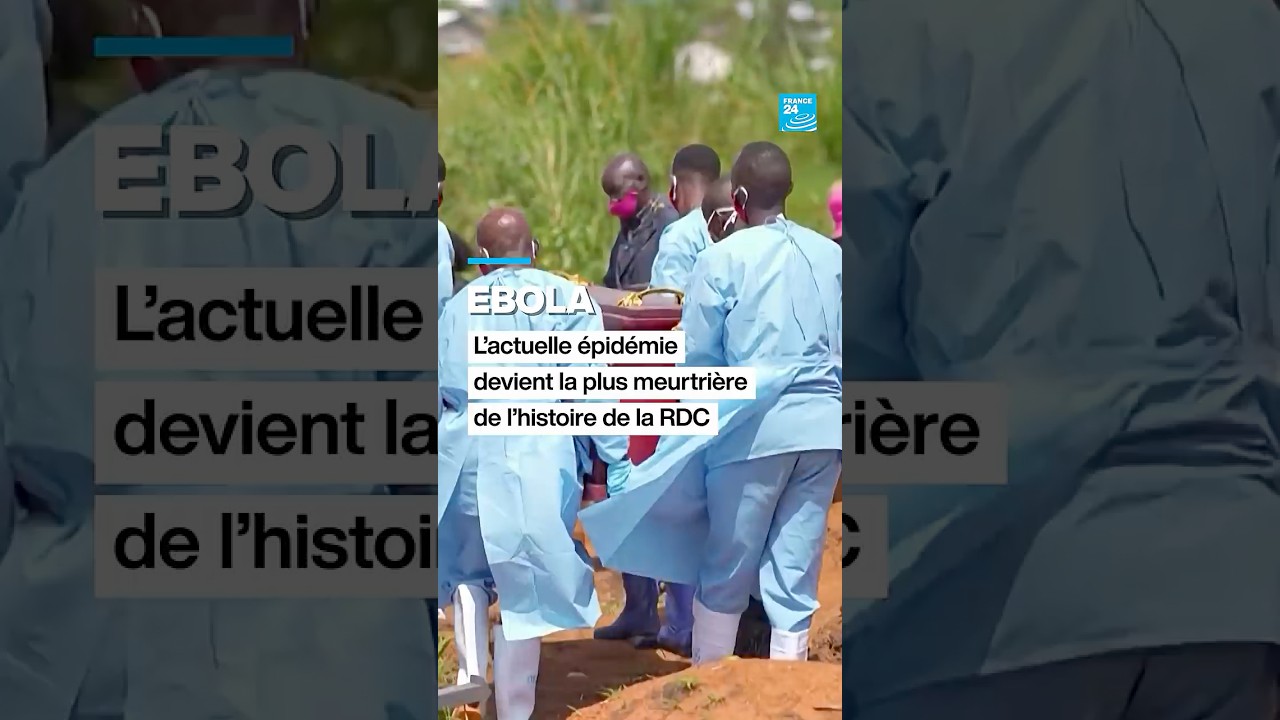
In three months, the Ebola outbreak in DR Congo caused by the Bundibugyo virus has surpassed the country’s previous national mortality record. As of August 15, 2026, the National Institute of Public Health was reporting 4,945 confirmed cases and 2,325 deaths. The current Ebola outbreak remains far from under control. Late detection, spread to six provinces, delays in accessing care, and the lack of a specific countermeasure are adding up.
A Historic Threshold Crossed on August 15
Stopped at August 15, INSP Situation Report No. 93 sets out the toll in DR Congo. It records 4,945 confirmed cases and 2,325 confirmed deaths, for a crude fatality rate of 47%. This ratio compares deaths to identified cases: it can change when infections or deaths are reported late.
Stopped at August 16, the WHO weekly report notes a sharp increase in one week. It records 640 additional confirmed cases and 367 additional confirmed deaths. It reports a crude fatality rate of 47.4% and the appearance of a case in Bas-Uélé, the sixth affected province. Its scope covers DR Congo and Uganda: these figures should therefore not be mechanically added to the previous day’s national total.
The previous record dated back to the 2018-2020 outbreak, caused by the Ebola Zaire virus. Its official toll stood at 3,481 cases, 2,299 deaths, and 1,162 survivors over nearly two years. The 2026 crisis is therefore now the deadliest in DR Congo’s history, though not in Ebola’s global history. The comparison remains imperfect: the 2018-2020 toll was final, while transmission is still ongoing.
Why the 2026 Ebola Outbreak Went Undetected for Weeks
The Pasteur Institute places the first likely infections in March 2026. The outbreak was not confirmed by DR Congo until May 15. Two days later, the World Health Organization classified it as a public health emergency of international concern. Imported cases had just been detected in Kampala, Uganda.
This delay is partly due to Bundibugyo’s characteristics. The first symptoms—fever, headache, pain, and weakness—resemble those of malaria or typhoid fever. Bleeding is not systematic. In laboratories mainly equipped to identify the Ebola Zaire virus, advanced PCR testing was needed to recognize this rarer species.
This biological difference also matters for the response. Vaccines and monoclonal antibodies designed against Ebola Zaire cannot be automatically applied to Bundibugyo. However, that alone does not explain the scale of the toll. There is no evidence that the virus is inherently deadlier than the one behind previous outbreaks.
Six Provinces and a Response Under Pressure
Ituri remains the epicenter, with 4,194 confirmed cases and 1,838 deaths counted as of August 15. North Kivu, Haut-Uélé, Tshopo, South Kivu, and now Bas-Uélé are also affected. In all, the national report lists cases in 55 health zones.
For the latest twenty-four hours reported, Congolese authorities recorded 101 new confirmed cases and 53 deaths. Thirty-three of those deaths occurred outside a health facility. This share illustrates delays in care. It does not allow us to conclude that all victims refused care or could not access it.
Several treatment or transit centers are reported as overwhelmed in Ituri. In North Kivu, the 142 beds reserved for suspected cases were occupied. The report mentions equipment shortages, strikes, and gaps in contact tracing. The situation varies widely from one province to another.
The war in the east of the country and population displacement make rapid detection and isolation more difficult. Distances, travel costs, and limited access to care worsen these obstacles. Distrust of certain health facilities fits into that context. It should not be reduced to some supposed irrationality on the part of residents. These factors converge, but the available data do not yet allow their respective weight in mortality to be measured.
No Specific Treatment, But Essential Care
There is currently no licensed vaccine, antiviral, or monoclonal antibody approved specifically for Bundibugyo. That does not mean Ebola cannot be treated. The WHO recommends optimized supportive care: rapid rehydration, symptom treatment, and prevention of complications. Started early, it increases the chances of survival.
Ebola spreads mainly through direct contact with a symptomatic person, their fluids, or the body of someone who has died. It is not an ordinary airborne infection. The response relies on early detection and isolation, as well as protecting health workers. It also includes 21-day contact tracing, safe and dignified burials, and community engagement.
Candidate vaccines and treatments are being evaluated, but no results yet allow them to be described as available or effective. As of August 18, two primary references remain accessible. These are the Congolese SitRep of August 15 and the WHO report stopped at August 16. In an outbreak that is still active, their figures will need to be updated before publication.
 Video unavailable